Showing posts with label Mythology. Show all posts

Monday, September 28, 2009

Mythology - Tiamat

Tiamat is part of the Enuma Elish, the Babylonian creation myth. Amidst the primordial chaos of the universe existed the God Apsu, depicted as an endless body of fresh water, and his wife Tiamat, a body of salt water. From the mixture of these two waters came a line of gods representing the core elements of earth and sky.

The young gods were wild and disruptive and Apsu plotted to kill them. Ea, son of the sky God Anu, overheard Apsu’s plot and slew him instead. Enraged, Tiamat leads a war against the younger Gods only to be slain herself by Ea’s son, Marduk. Marduk fashions the world and all of its peoples from Tiamat’s blood and bones.

Mythology - Bahamut

Bahamut is certainly one of, if not the most frequently reoccurring “characters” in the Final Fantasy series. I put characters in quotation marks because his appearance takes different forms throughout the series and the word does not always apply, but in the large majority of the games he is depicted as the king of dragons or as a heavenly body that takes the form of a dragon.

It might surprise you, then, to learn that the original Bahamut was depicted as an immense fish with a head that resembled that of an elephant. The mythological origins of Bahamut are about as old as mythology gets, which makes it difficult to translate and to sort through the many references that could or do mention him, but it's generally accepted that he first appeared in ancient Arabic stories about the nature of the universe. The stories suggest that Bahamut was a massive fish swimming through an endless sea. Atop Bahamut’s back was a massive bull, and atop the bull’s head was a mountain on which rested the Earth and a varying number of heavens and hells.

Today’s impression of Bahamut as a dragon has been attributed to Wizards of the Coast, who gave the name to one of the dragon deities from their popular Dungeons and Dragons game series.

Mythology - Excalibur

The history and mythology surrounding the legendary Excalibur has been explored and re-explored hundreds of times by both laymen and scholars, and I claim neither the expertise nor the desire to open that door yet again in search of even a semi-definitive explanation. Suffice to say that Excalibur was the sword of Arthur, potentially historical, definitely legendary King of Britain. Scholars believe the sword originated in Welsh legend and that the current spelling evolved after British historian Geoffery of Monmouth included the sword in his book, The History of the Kings of Britain.

Mythology - Masamune

If memory serves, the Masamune is one of the few reoccurring elements in the Final Fantasy series that does not take different forms in different games. The Masamune is always a sword, though in FF8 it's wielded by Gilgamesh, rather than by a party member. It's also one of the only items with a clear, verifiable history--Masamune truly did exist, though not quite in the way the games portray him.

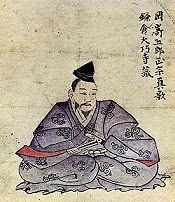
Goro Nyudo Masamune was a Japanese sword smith who lived and worked c. 1264 – 1343 CE. He is largely considered Japan’s greatest sword artisan and his surviving works are among some of the country’s most prized national treasures.

In a number of stories and legends, Masamune’s work has been connected with that of another Japanese blacksmith, Muramasa, whose name has also appeared on swords in the Final Fantasy series. In reality Muramasa, who dated his swords, was working around 1500 CE, and as such could not have known Masamune, but the legends about the two still exist.

One of the more popular legends involves a contest between the two sword smiths. Each man forged a sword and then dipped its blade into a stream. Leaves floating downstream swerved unerringly into the path of Muramasa’s blade and were cut in half. In contrast, leaves that were on track to be cut by Masamune’s blade swerved aside and were spared. A passing monk approached the two and described that in Muramasa’s blade he sensed a deep blood thirst, as the sword would not spare even a leaf. Masamune’s blade, said the monk, possessed the calm consideration of a true warrior and would not harm an innocent. This legend helps to set up the idea that Masamune’s swords were superior to Muramasa’s, an idea that is preserved in the Final Fantasy series.

  © Blogger template 'Minimalist E' by Ourblogtemplates.com 2008

Back to TOP